Tuesday, August 24, 2010

Job opening: GIS Analyst


The Massachusetts Technology Collaborative is looking for a GIS Analyst with a degree in geography or a related field, one year of experience, and strong communication skills, to work on an exciting initiative involving the deployment of broadband access in western Massachusetts. The position may be ideal for a recent graduate from our department. Current students might wish to review this and other announcements to see what kinds of skills and experience are in demand. Prospective students are invited to look at the kinds of jobs for which  geographers tend to be qualified.


Please see the position announcement for details; review of applications began on August 6.

Wednesday, August 11, 2010

Erosion Control Instructors needed

The announcement below could be a great opportunity for some our department's alumni who work as conservation agents, commissioners, consultants, or contractors (and we have such alumni!). Current students should have a look, too, as this indicates the kinds of professional credentials that geographers sometimes pursue. Contact Dr. Hayes-Bohanan with any questions about this opportunity or MACC in general.

Massachusetts Association of Conservation Commissions (MACC) is a private non-profit organization whose primary mission is to support and educate Conservation Commissioners. We received a grant to develop new statewide educational programs on erosion and sedimentation control over the next year. MACC is interested in retaining the services of erosion and sedimentation control specialists and instructors to develop and teach these erosion and sedimentation control workshops throughout Massachusetts.

You may download these requests from the MACC Website here: http://maccweb.org/resources_jobs.html

Monday, August 2, 2010

Job opening in Nicaragua

The NGO Christian Aid is looking for a program director in Nicaragua, to work on specific programs related to climate change. This job posting is a good example of the kind of position for which some geographers are well-suited. On a related note, plans are underway for the department's fifth study tour in Nicaragua -- January 2-13, 2011. It will be a very integrated look at economic and social development in a post-war developing economy. It will also be a comprehensive look at coffee, from the field to export.

Tuesday, July 27, 2010

Boston Harbor Islands

Photo from Directory of Boston
A recent Boston Globe article describes efforts to expand tourism at the islands in Boston Harbor, which have been under the auspices of the National Park Service since 1996. It describes the friction of distance created by the relatively high-cost ferries. Even so, the islands are scenic, historic, and varied enough to provide many opportunities for geographers to explore. They might make a good destination for a GEO excursion in the fall, and certainly a nice outing for any summer day.

Geographers can also learn a lot about the harbor from the Hull Lifesaving Museum, which has recently embarked on an exciting geographic education project.

Thursday, July 22, 2010

BSC Geography and the Summer of Science

The department's participation at the first-annual Connect Summer of Science event at Mass Maritime has yielded an unexpected benefit. The Cape Eyes online technology journal includes an excellent article about the fit between geography and the other STEM (science, technology, engineering, and math) disciplines. The author makes a very strong case for a holistic education grounded in scientific inquiry, especially in the context of 21st century competitiveness.
(See more photos on EarthView Blog.)

Regarding competitiveness, the United States has weathered this recession fairly well because other countries are still willing to lend us money to buy things. This gives us a chance to do something we had better get serious about: building 21st-century skills. Those include STEM (especially math!), writing, foreign languages, and of course GEOGRAPHY!

Thursday, July 1, 2010

EarthView at Mass Maritime

Friends of the Geography Department are invited and encouraged to join the EarthView team at Mass Maritime Academy next Friday, July 9. We will be there from 1 to 3 pm as part of an event that showcases K-12 outreach programs in science and technology throughout the region. See the EarthView blog for details and contact Drs. Domingo and Hayes-Bohanan with any questions.

Thursday, June 10, 2010

EarthView at the State House

Partnering with the Massachusetts Geographic Alliance, the department's EarthView team had a very successful visit to the State House on June 7. Department alumni Ed Donnelly and Matt Martel joined in what might become an annual event. Below, Senator Brewer, who hosted the event, poses with several geography educators and students.

Thursday, June 3, 2010

EarthView at the state house

This may be short notice, but friends of the department are invited to join us on Beacon Hill on Monday, June 7.

Wednesday, June 2, 2010

Career Advice from Dear Abby

The following letter and reply appeared in the Dear Abby column of June 2, 2010. It is posted here for the consideration of our graduates and future graduates. What the writer describes is all-too common. We have been known to discard applications for faculty positions at the college on a similar basis.

DEAR ABBY: The company where I work posted an ad online and at our state unemployment job board for a position that needed to be filled. The ad detailed simple but specific instructions that included asking applicants to write a cover letter to address certain questions. It also said -- in large letters: "YOU MUST FOLLOW THESE DIRECTIONS OR YOU WILL NOT BE CONSIDERED FOR EMPLOYMENT."


Monday, May 31, 2010

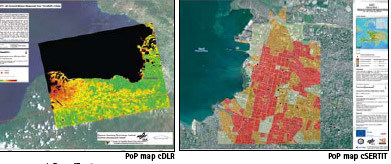
Lessons from Haiti

 Coordinates is an online magazine, based in New Delhi, that covers geopositioning and other geotechnologies, with the intention of making information about developments in these fields more accessible to end users. 

The May 2010 issue includes Lessons from Haiti, an article that describes how the UN-Spider program -- established for just such emergencies in 2006 -- worked in Haiti, how its operation had to be modified, and what lessons were learned.